AT A GLANCE
The product in context.
A memory card is part of a recording workflow, not just a capacity purchase. This page covers the 256GB SDSQXCD-256G-GN6MA version of SanDisk Extreme PRO microSDXC. Other Extreme, Ultra, Express or newer Extreme PRO variants can have different specifications.
This is a researched editorial overview based on the linked manufacturer information. This product is not in the owner’s collection and has not been tested by GadgetsBag. Pros, cons and the assessment are provisional, not firsthand findings.
A CLOSER LOOK
Photo gallery.
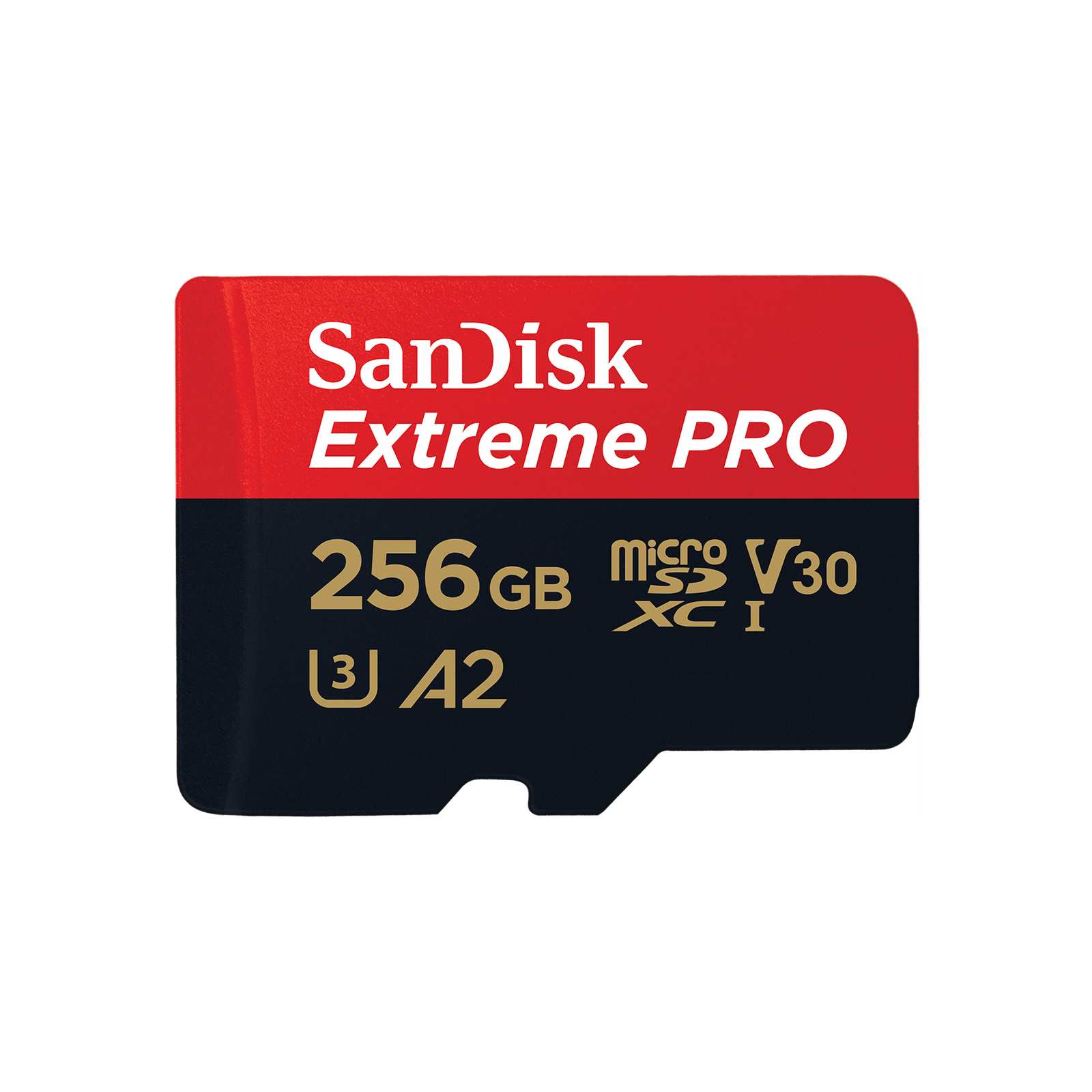
Image 1 of 1
Choose a thumbnail, then tap the large photo to enlarge it. Use the viewer arrows or swipe to explore. Product imagery is credited to its source.
THE PUBLISHED DETAILS
Product specifications.
- Capacity
- 256GB nominal; formatted usable capacity is lower
- Model
- SDSQXCD-256G-GN6MA
- Format
- microSDXC, UHS-I
- Ratings
- U3, Video Speed Class V30 and Application Class A2
- Read claim
- Up to 200MB/s with compatible equipment and manufacturer technology
- Write claim
- Up to 140MB/s under SanDisk’s test conditions
- Compatibility
- Check the recording device’s supported capacity, format and recommended-card list
Source: Manufacturer specifications and feature notes ↗. Manufacturer or listing claims are not our measurements. Check the exact regional variant.
THE PRACTICAL PERSPECTIVE
Overall review.
Buy for the recording device
Begin with the camera’s published card requirements and supported capacities. The headline read speed does not by itself establish suitability for a particular recording mode. Confirm the exact card model on the recommendation list for your device where one is provided, then format and test the card before important use.
Give offloading a place in the plan
Decide how you will copy recordings during the trip and where a second copy will live. A larger card can reduce how often you change cards, but it should not replace a routine for checking and copying files. Leave time for the whole transfer rather than assuming a headline figure will describe your reader and computer.
Keep the model identity clear
Check the seller, model code and capacity rather than relying on a similar label design. Only one verified manufacturer image is shown here; we have not filled the gallery with other capacities or card families. We have not benchmarked this card or established compatibility with a specific camera.
WEIGH THE TRADE-OFFS
Pros & cons.
Based on published features and editorial assessment; not test results.
Pros
- Compact recording-storage format with published V30 rating
- Model and capacity are explicitly identified
- Fits a defined offload workflow with a compatible reader
Cons
- Maximum read figures require suitable equipment
- Recording compatibility still needs an exact-device check
- A card alone is not a backup plan
Who is it for?
Worth considering for
- Camera owners checking a manufacturer-recommended card list
- Travellers with a regular media-offload routine
- People comparing the exact SDSQXCD version
Think about first
- Seller reliability and exact model code
- Supported recording modes and maximum capacity
- A compatible reader and an additional copy of important footage
THE TAKEAWAY
Our assessment.
Choose this exact card only after checking the recording device’s requirements. A known model and a tested copying routine matter more than an isolated headline speed. This is a specification-based overview, not a compatibility certification.
Provisional assessment · Hands-on testing pendingWhat we still need to test.
These checks will help turn the initial assessment into a hands-on review.
- Sustained write behaviour on documented hardware
- Recording in the intended camera mode
- Offload speed through the intended reader
Read our editorial policy.